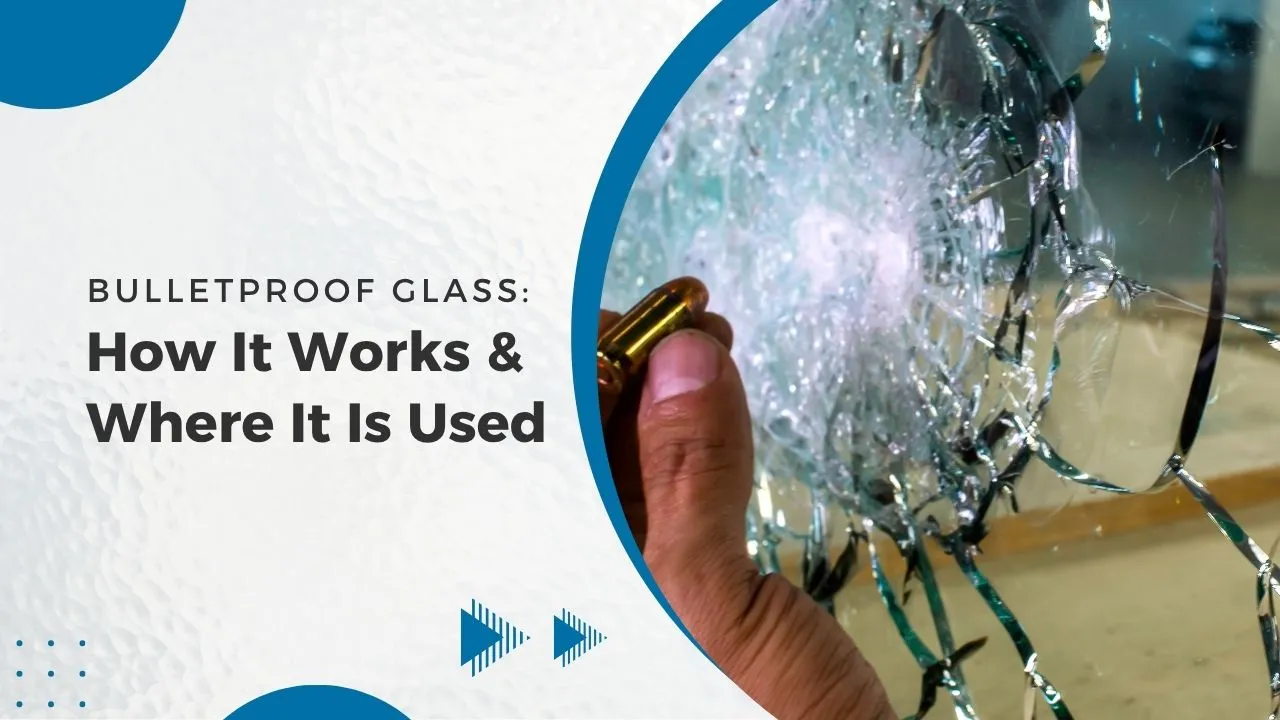
Most people have seen bulletproof glass somewhere. A bank teller window, a police cruiser partition, or the thick panel at a late-night pharmacy counter in Bergen County. But almost nobody knows what it is actually made of, how it stops a bullet without collapsing, or why it looks completely identical to regular glass from three feet away. The science is straightforward once someone explains it properly. That is what this article does.
What bulletproof glass is actually made of
The name is misleading. No glass is truly bulletproof. The correct term is bullet-resistant glass, and the reason it works has nothing to do with the glass being harder or denser than normal. It is a layered construction, multiple sheets of glass bonded together with a clear plastic called polycarbonate or polyvinyl butyral. Those alternating layers of hard glass and flexible plastic are fused under heat and pressure into a single panel. From outside, it looks and feels like any other pane of glass. The difference is entirely in what happens the moment something hits it. A basic panel for a pharmacy counter might be just over an inch thick. A panel built for a government installation can be several inches thick and weigh close to 20 pounds per square foot.
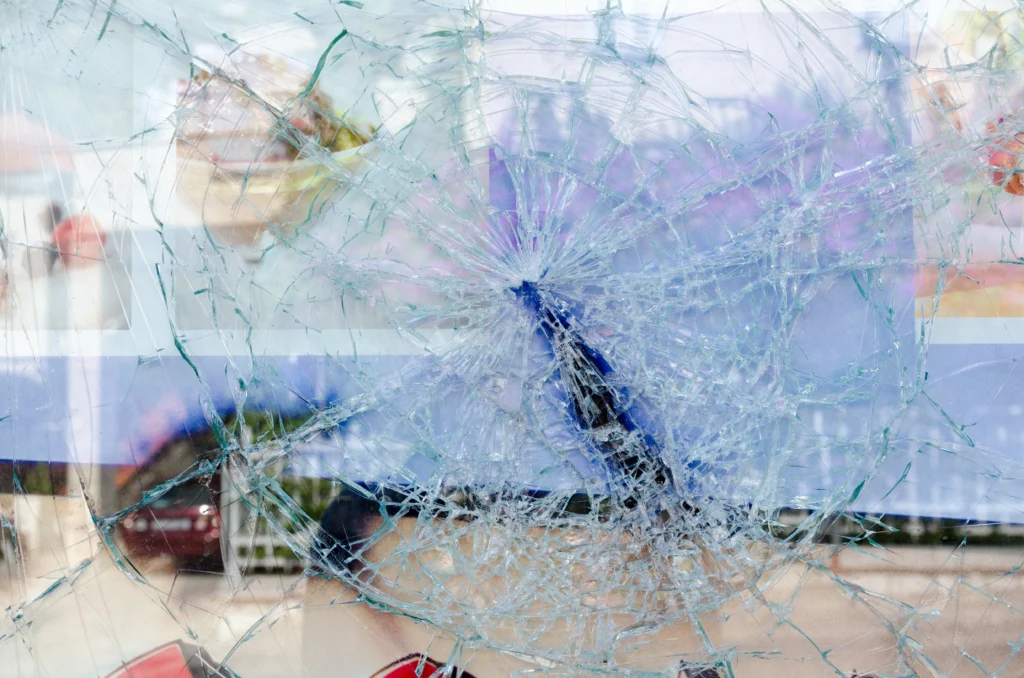
How it actually stops a bullet
When a bullet hits standard glass, the rigid surface cannot absorb the energy. The glass shatters and the bullet passes through. Bullet-resistant glass works differently because of what happens at each layer:
- The outer glass surface fractures on impact, exactly as normal glass would
- The energy hits the polycarbonate interlayer underneath instead of driving straight through
- Polycarbonate deforms under impact without breaking — it absorbs and spreads energy sideways
- By the time the impact works through several layers, the bullet’s energy is spent
- The bullet either stops inside the panel or exits the far side too slowly to cause serious injury
Think of it like a car crumple zone. The deformation is the point, not a failure.
Protection levels: what each one actually stops
The industry uses UL 752, a standard published by Underwriters Laboratories, to classify bullet-resistant panels by threat level. Most commercial buildings in New Jersey work in the Level 1 to Level 3 range. Here is what each one is designed to stop:
Level 1 – Three shots from a 9mm handgun. Standard for bank teller windows, pharmacy counters, and cash-handling retail.
Level 2 – Three shots from a .357 Magnum. Used in jewelry stores, check cashing businesses, and higher-risk retail locations.
Level 3 – Three shots from a .44 Magnum. Common in courthouses, government offices, and high-security reception areas.
Level 4 and above – Designed for rifle rounds. Used in military installations, embassies, and armored vehicles. Most New Jersey commercial properties never need to go above

Where it actually shows up in real New Jersey buildings
Bullet-resistant glass is far more common in everyday buildings than most people realize. Pharmacies across New Jersey use Level 1 panels at dispensing counters, not just for theft prevention but for staff safety during late hours. Bank teller windows and drive-through transaction panels are the most familiar application. Government buildings including courthouses, DMV offices, and police station reception areas use it across Bergen County, Hudson County, and Essex County. Late-night convenience stores and gas station payment windows in areas with real security concerns are another consistent application our team gets called about.
Schools are a growing category that most people do not immediately think of. Administrative office entry windows and vestibule glazing have been part of security upgrade projects across New Jersey school districts in recent years. The application is Level 1 in most cases, specified at the entry point where staff interact with visitors before the main building entrance. It is a straightforward installation that makes a measurable difference to how a school building controls access from the outside.
Is this the same as the laminated glass in commercial storefronts?
They share the same core principle but are very different products in practice. Standard laminated safety glass, which Luso Glass installs on commercial storefronts and overhead glazing across New Jersey, has two glass panels with a single plastic interlayer designed to hold the glass together when broken so it stays in the frame rather than falling. Bullet-resistant glass multiplies that same layered approach many times over with additional glass and polycarbonate layers specifically calibrated to absorb a defined threat level. What both products have in common is the one property that matters most in any safety application: when they break, the pieces stay in place. No dangerous shards, no collapsed panel, no opening left exposed.
FAQ’s
The outer layers crack and fracture on impact that is normal and expected. The plastic interlayer holds every piece in place so the panel does not collapse. After taking a hit it needs to be replaced, but it does not fail dangerously.
Not in normal conditions. Modern polycarbonate-based panels are optically clear. A customer walking into a Level 1 bank installation would not be able to tell the difference from standard glass by sight.
Yes, but only before fabrication is complete. Like tempered glass, it cannot be cut or drilled after the lamination process without destroying the panel. We take final measurements twice on every New Jersey security glazing project for exactly this reason.
No universal code mandate exists. Where it is specified, the decision comes from the building owner, insurer, or security consultant based on the risk profile of the specific property. We can assess your New Jersey commercial property and give you a direct recommendation.
Conclusion
The “Glass Bridge: The Penn Monument for Hope” is a powerful symbol of what can be achieved when ancient wisdom and modern technology converge. It serves as an inspiration for future architectural endeavors, pushing the boundaries of material science and design.