Most people pick a mirror the same way they pick a picture frame. They look at the shape, check the size, glance at the price, and walk away. What they almost never check is what the mirror is actually made of, and that is the only thing that determines whether it still looks sharp in five years or starts showing dark edges and a distorted reflection by year three.
At Luso Glass, we supply and install custom mirrors for homes and businesses across Union, NJ and throughout New Jersey every week. This guide covers every factor that separates a quality mirror from one that will let you down, written plainly so you can actually use it the next time you are standing in a store.
The Glass Is Where Quality Starts and Where Most Mirrors Fall Short
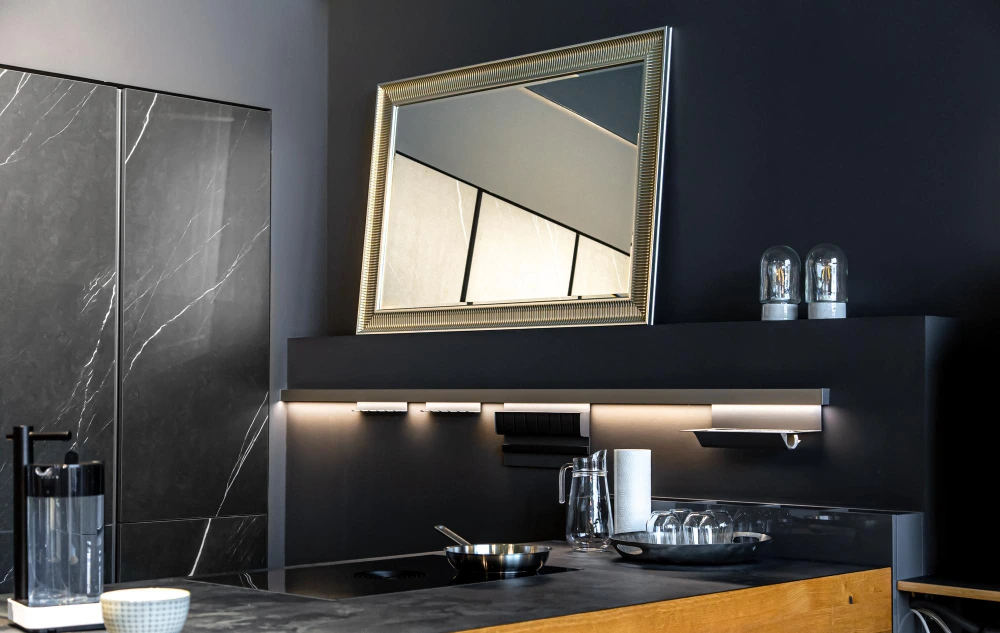
Standard glass contains iron in its composition, and that iron gives the glass a faint greenish tint that shifts every color in your reflection slightly. In a small mirror the effect is hard to notice. In a full-length panel or a large bathroom vanity mirror, skin tones look cooler, clothing colors read differently, and the reflection feels slightly off without you being able to explain why. Quality mirrors use low-iron glass, which removes that tint and gives you a neutral color-accurate reflection. Beyond the glass type, thickness determines whether a large mirror stays flat on the wall or flexes and distorts. Budget mirrors use 2 to 3mm glass because it is cheaper to ship. That thin glass follows the contour of whatever wall it is mounted on rather than holding its own flat plane, which is why so many affordable full-length mirrors have a slightly warped look. Quality mirrors use 5 to 6mm glass that stays rigid regardless of minor wall imperfections, and the reflection stays consistent from edge to edge. If a retailer cannot tell you the glass thickness or the glass type, that tells you something worth knowing before you spend your money.
What Is Behind the Glass Matters More Than Most People Realize
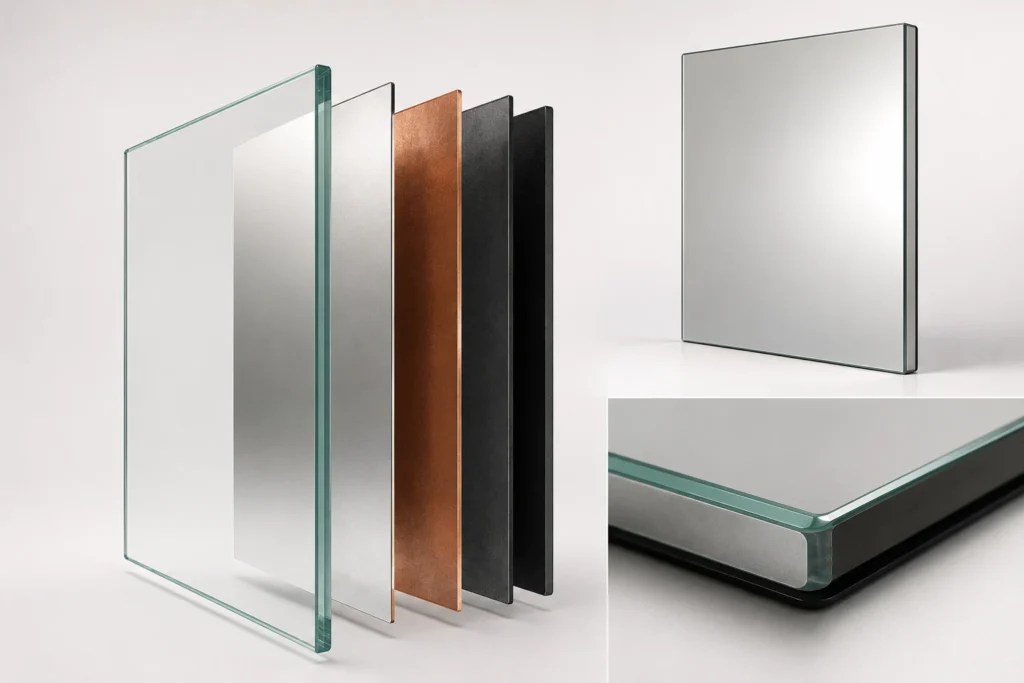
The reflective surface of a mirror is a thin layer of silver deposited onto the back of the glass. Everything behind that silver is there to protect it. Here is what separates a quality mirror from a budget one at each layer.
1. The Silver Coating
Cheap mirrors use a thin silver layer that reflects less light and oxidizes faster when moisture reaches it. Quality mirrors use a thicker coating applied evenly across the full surface, which gives you a brighter sharper reflection and slows oxidation significantly.
2. The Backing Protection
Budget mirrors have one layer of copper and one coat of paint between the silver and the outside world. That is not enough for a New Jersey bathroom where steam and cleaning products are part of daily life. Quality mirrors use a double-backed system with sealed edges that block moisture at the most vulnerable entry point.
3. The Edge Seal
The raw cut edge of a mirror panel is where moisture enters the backing first. A quality mirror has sealed edges regardless of the edge style. An unsealed edge is one of the fastest ways a mirror develops the black corner spots that signal silver oxidation, and once oxidation starts it cannot be reversed.
Four Things You Can Check in a Store Before You Buy
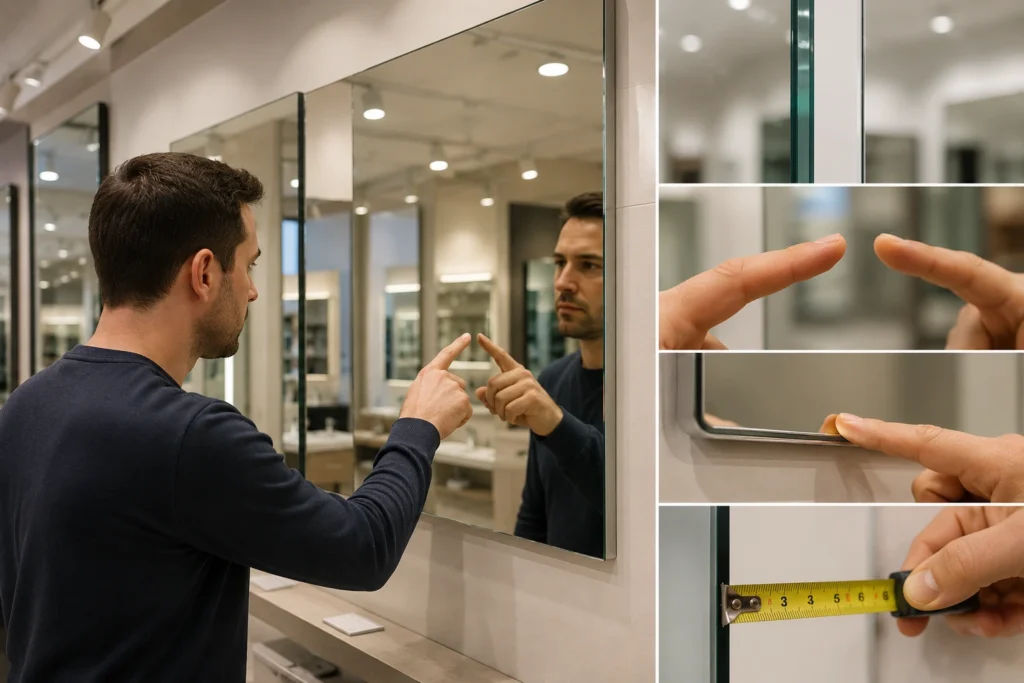
You do not need to be a glass expert to assess a mirror before buying it. These four checks take under two minutes and tell you most of what you need to know.
- Check the edge color: a green tint means standard iron-rich glass, a clear or faintly white edge means low-iron glass with better color accuracy
- Do the finger test: touch your fingertip to the glass and check the gap between your finger and its reflection, a small gap means thick quality silver close to the glass surface
- Run your finger along the edge: a smooth polished or beveled finish means the manufacturer completed the product properly, a sharp raw edge means they did not
- Ask about thickness: any mirror larger than 24 inches should be at least 5mm thick, anything thinner will flex and distort on most walls
If the person selling the mirror cannot answer basic questions about glass thickness or backing specification, that is a sign worth taking seriously before committing to a purchase.
Where Mirror Quality Makes the Biggest Practical Difference in New Jersey
Bathrooms are where cheap mirrors fail fastest. The combination of daily steam, weekly cleaning products, and New Jersey’s seasonal humidity creates exactly the conditions that expose every weakness in a budget mirror’s backing system. A single-backed mirror with unsealed edges in a Union County or Somerset County bathroom will typically start showing black corner spots within three to five years. A quality double-backed mirror with sealed edges in the same bathroom can hold up for fifteen years or more without visible degradation. That difference in lifespan is the real cost comparison, not the price tag on the day of purchase.
Commercial spaces amplify every quality difference further. A gym mirror wall in Passaic County, a salon fitting in Bergen County, or a hotel bathroom in Mercer County sees far more humidity, more cleaning, and more physical activity near the glass than any residential bathroom. Budget mirrors in commercial environments rarely last more than two to three years before edge blackening and distortion make them look unprofessional. Quality mirrors in the same environments hold their appearance through the kind of daily use a commercial space demands. For any New Jersey business owner choosing mirrors for a commercial installation, the specification is not a detail to leave to whoever is selling the product. It is a decision worth getting right from the start.
Questions Worth Asking Before You Buy a Mirror
No. Black spots on a mirror are oxidized silver, and silver oxidation cannot be reversed. Once the backing has been compromised and moisture has reached the silver layer, the only solution is replacing the mirror. The best approach is choosing a mirror with proper backing protection from the start, particularly for bathrooms and commercial spaces across New Jersey where humidity is a consistent factor.
Not at all. A frameless quality mirror with low-iron glass, thick silver coating, double backing, and sealed polished edges will outlast a framed budget mirror in almost any environment. The frame on a cheap mirror often hides a raw glass edge and a thin single-backed panel. A frame is not evidence of quality. The glass specification and backing system are.
Check the edges for blackening. Run your finger along the edge to feel whether it is polished or raw. Look at the edge color of the glass for a green tint. If the mirror has been up for three years or less and is already showing dark corners or a slightly distorted reflection in a large panel, those are reliable signs the glass or backing specification was not up to the job.
Yes. We supply and install custom mirrors for residential and commercial clients throughout Union, NJ and all surrounding New Jersey counties including Bergen, Essex, Morris, Somerset, Passaic, Middlesex, Monmouth, Mercer, Hudson, Hunterdon, Sussex, and Warren. Every mirror we install is specified for the environment it is going into, with the glass thickness, silver coating, backing protection, and edge treatment confirmed before the order is placed.What Makes a Mirror High Quality | Luso Glass NJ