Architectural glass has become an essential element in modern residential and commercial construction. Beyond its visual appeal, glass contributes to safety, energy efficiency, natural lighting, and overall building performance. From office buildings and retail storefronts to residential interiors and exterior facades, different types of architectural glass are designed to serve specific purposes.
Understanding the various types of architectural glass can help property owners, architects, builders, and designers select the most suitable solution for their projects. In this guide, we’ll explore the most common types of architectural glass and their practical applications.
What Is Architectural Glass?
Architectural glass refers to specially manufactured glass products used in building construction and design. Unlike standard glass, architectural glass is engineered to provide additional benefits such as improved strength, safety, insulation, privacy, and aesthetics.
Today, architectural glass is commonly used in:
- Commercial storefronts
- Office buildings
- Residential homes
- Glass partitions
- Railings and balconies
- Windows and doors
- Shower enclosures
- Skylights and facades
The right glass selection can significantly impact a building’s appearance, comfort, and performance.
Tempered Glass
Tempered glass is one of the most widely used architectural glass types due to its strength and safety features. It undergoes a special heat-treatment process that makes it several times stronger than regular glass.
Common Uses of Tempered Glass
- Glass doors
- Shower enclosures
- Storefront systems
- Glass railings
- Office partitions
- Patio doors
Benefits of Tempered Glass
- Increased durability
- Enhanced safety
- Heat resistance
- Compliance with building codes
If broken, tempered glass shatters into small, rounded pieces rather than sharp shards, reducing the risk of injury.
Laminated Glass
Laminated glass consists of two or more glass layers bonded together with a durable interlayer. This construction helps keep the glass intact even when cracked or impacted.
Common Uses of Laminated Glass
- Commercial storefronts
- Building facades
- Skylights
- Glass canopies
- Security applications
Benefits of Laminated Glass
- Improved security
- Sound reduction
- UV protection
- Enhanced safety
Because it remains largely intact after impact, laminated glass is commonly used in areas requiring additional protection and security.
Insulated Glass
Insulated glass units (IGUs) consist of multiple panes of glass separated by an air or gas-filled space. They are designed to improve thermal performance and energy efficiency.
Common Uses of Insulated Glass
- Residential windows
- Commercial windows
- Curtain wall systems
- Glass facades
Benefits of Insulated Glass
- Better temperature control
- Reduced energy consumption
- Improved indoor comfort
- Lower utility costs
Insulated glass has become a preferred option for modern energy-efficient buildings.
Low-E Glass
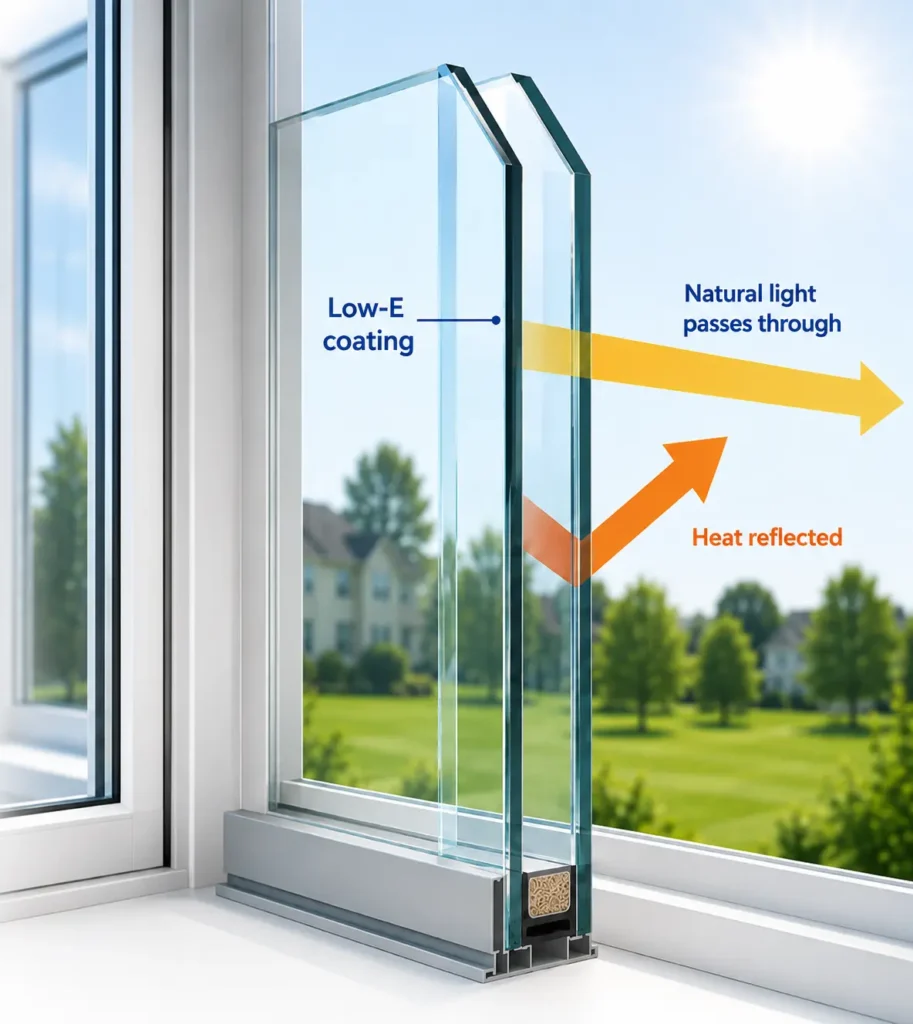
Low-Emissivity (Low-E) glass features a microscopic coating that reflects heat while allowing natural light to pass through.
Common Uses of Low-E Glass
- Residential windows
- Office buildings
- Commercial storefronts
- Energy-efficient construction
Benefits of Low-E Glass
- Improved energy efficiency
- Reduced heat transfer
- UV protection
- Enhanced indoor comfort
Low-E glass is often combined with insulated glass units to maximize energy performance.
Frosted Glass
Frosted glass provides privacy while still allowing natural light to pass through. It is created using acid etching or sandblasting techniques.
Common Uses of Frosted Glass
- Bathroom windows
- Office partitions
- Conference rooms
- Entry doors
Benefits of Frosted Glass
- Increased privacy
- Decorative appearance
- Natural light transmission
- Low maintenance
Frosted glass is a popular choice for spaces where visibility needs to be limited without sacrificing brightness.
Tinted Glass
Tinted glass contains special additives that reduce glare and solar heat gain.
Common Uses of Tinted Glass
- Commercial buildings
- Office windows
- Glass facades
- Residential properties
Benefits of Tinted Glass
- Reduced glare
- Better solar control
- Increased privacy
- Enhanced aesthetics
Tinted glass is often used in modern commercial architecture to improve comfort and energy efficiency.
Decorative Glass
Decorative glass is designed to enhance the visual appeal of residential and commercial spaces. It is available in various textures, patterns, and finishes.
Common Uses of Decorative Glass
- Interior partitions
- Entryways
- Custom mirrors
- Feature walls
- Cabinet inserts
Benefits of Decorative Glass
- Unique visual appeal
- Custom design options
- Increased property value
- Enhanced interior aesthetics
Decorative glass allows designers and property owners to create distinctive architectural features.
Smart Glass
Smart glass is an innovative technology that changes transparency when activated by electricity.
Common Uses of Smart Glass
- Executive offices
- Conference rooms
- Luxury homes
- Healthcare facilities
Benefits of Smart Glass
- Adjustable privacy
- Modern appearance
- Reduced need for blinds
- Improved energy efficiency
As technology advances, smart glass continues to gain popularity in contemporary building design.
How to Choose the Right Architectural Glass
Selecting the right architectural glass depends on several factors, including:
Building Purpose
Commercial and residential projects often require different glass specifications.
Safety Requirements
Tempered and laminated glass provide additional protection for high-traffic areas.
Energy Efficiency Goals
Low-E and insulated glass help improve thermal performance and reduce energy costs.
Privacy Needs
Frosted and smart glass are ideal for spaces requiring privacy.
Design Preferences
Decorative and tinted glass can enhance the overall appearance of a property.
Working with experienced glass professionals can help ensure the right glass solution is selected for each application.
Why Architectural Glass Is Important in Modern Construction
Architectural glass plays a key role in contemporary building design by combining functionality with aesthetics. It allows architects and property owners to create bright, open spaces while improving safety, energy efficiency, and occupant comfort.
As building technologies continue to evolve, architectural glass remains one of the most versatile and valuable materials used in residential and commercial construction.
Conclusion
Understanding the different types of architectural glass and their uses is essential when planning residential or commercial construction projects. From tempered and laminated glass to insulated, decorative, and smart glass solutions, each type offers unique advantages based on safety, performance, privacy, and design requirements.
Choosing the right architectural glass can improve building efficiency, enhance aesthetics, and create more functional spaces that meet the demands of modern construction.
FAQs
Architectural glass is used in windows, doors, storefronts, partitions, railings, facades, and other building applications. It improves aesthetics, safety, natural lighting, and energy efficiency.
Tempered glass is significantly stronger than standard glass and is commonly used in areas requiring additional durability and safety.
Tempered glass is designed to break into small pieces for safety, while laminated glass remains largely intact after impact due to its protective interlayer.
Yes. Low-E glass improves energy efficiency by reducing heat transfer, helping lower heating and cooling costs throughout the year.
Frosted glass and smart glass are among the most effective options for privacy while still allowing natural light to enter a space.