Shower glass looks easy to maintain until it does not. Most people wipe it down with whatever cleaning spray is under the sink, notice it still looks cloudy after a week, and assume their glass just gets dirty quickly. The real problem is usually not how often they are cleaning it but how they are cleaning it. Soap scum does not respond the same way as general surface grime. Hard water deposits need a different approach than organic residue. Using the wrong product or the wrong technique does not just fail to clean the glass properly. In some cases it makes the buildup worse or damages the glass surface over time.
This guide covers how shower glass actually gets dirty, what tools and products work, a step-by-step cleaning process, how to handle stubborn stains, what not to use, and the daily and weekly habits that genuinely keep shower glass looking clear with less effort over time.
Why Shower Glass Gets Dirty So Fast
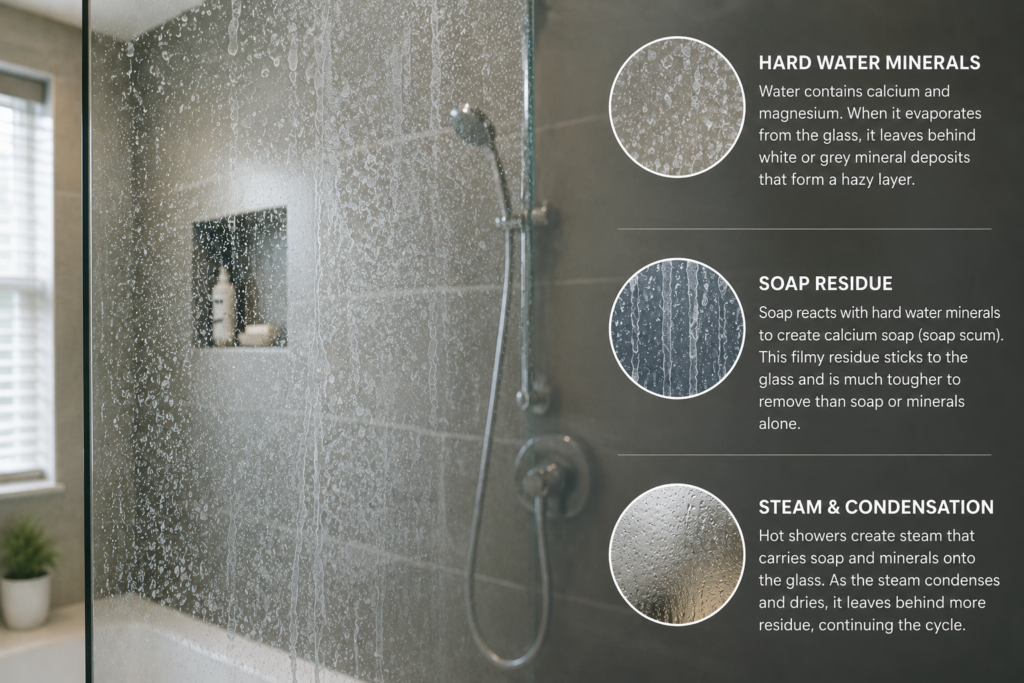
Most of what builds up on shower glass is not dirt in the traditional sense. It is a combination of three things working together: hard water minerals, soap residue, and body oils. Understanding each one makes the cleaning process much more logical.
Hard water is the starting point for most of the visible buildup on shower glass. Water in many parts of New Jersey and across the United States contains high levels of dissolved calcium and magnesium. When water hits your shower glass and evaporates, it leaves those minerals behind as a white or grey haze. Over time, repeated exposure builds that mineral deposit into a visible layer that does not respond to general all-purpose cleaners because it is essentially a thin mineral crust, not surface grime.
Soap residue adds to the problem in a specific way. Most bar soaps contain talc and fatty acids that do not rinse cleanly off glass surfaces. They bind with the calcium in hard water and form calcium soap, which is the filmy white or yellowish buildup most people call soap scum. It is harder to remove than either the soap or the mineral deposit on its own because the chemical bond between them is stronger than either component.
Steam closes the loop. Every hot shower produces steam that condenses on the glass surface, carrying soap particles and mineral content with it. Even glass that is not directly hit by water picks up this residue over time. The cycle repeats with every shower and the buildup accumulates faster than most people expect.
What You Need Before You Start
You do not need specialist cleaning products to clean shower glass effectively. Most of what works well is already in a typical kitchen or bathroom.
White vinegar: The most effective household product for dissolving hard water mineral deposits. The acetic acid breaks down calcium carbonate, which is the primary component of most hard water scale on shower glass.
Dish soap: A small amount of standard dish soap mixed with warm water handles soap scum and body oil residue effectively. Use it as a secondary cleaner after the vinegar treatment rather than as the primary agent.
Baking soda: Combined with dish soap it forms a mild abrasive paste that removes stubborn soap scum without scratching glass. Useful for spots that vinegar alone does not fully clear.
Microfiber cloths: The correct cloth for cleaning shower glass. Cotton towels and paper towels leave lint and can streak. Microfiber picks up residue without scratching and polishes the surface as it cleans.
A squeegee: The single most useful tool for shower glass maintenance. A rubber-bladed squeegee used after every shower removes most of the water that would otherwise evaporate and leave mineral deposits behind.
Spray bottle: For applying diluted vinegar solution evenly across the glass surface.
One thing to avoid buying: products marketed specifically as shower glass cleaners. Many of them contain surfactants that leave a thin film on the glass which attracts new residue faster than a properly cleaned surface would.
Step-by-Step: How to Clean Shower Glass Properly
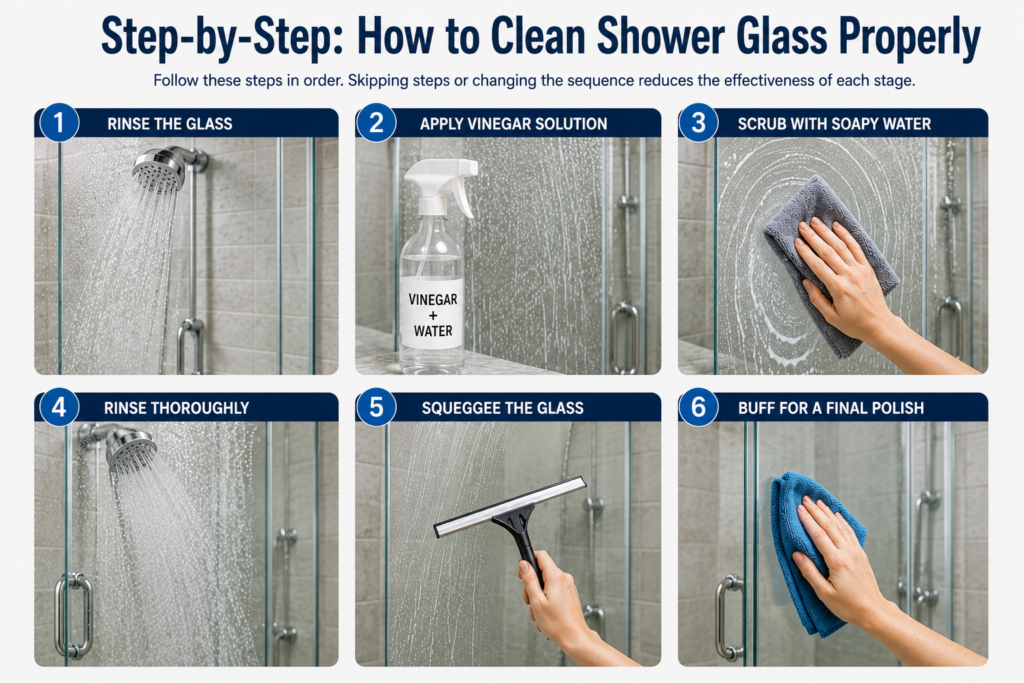
Follow these steps in order. Skipping steps or changing the sequence reduces the effectiveness of each stage.
Step 1: Rinse the glass with warm water first. This loosens surface dust and any dry residue sitting on the glass and makes the cleaning agents more effective on what remains.
Step 2: Mix equal parts white vinegar and warm water in a spray bottle. Spray the entire glass surface generously and let it sit for five to ten minutes. Do not wipe it off immediately. The dwell time is what allows the acetic acid to break down the mineral deposits.
Step 3: While the vinegar is sitting, mix a small amount of dish soap with warm water in a separate container. After the vinegar dwell time is complete, apply the soapy water over the vinegar layer and scrub with a microfiber cloth using circular motions. The vinegar has loosened the mineral layer and the dish soap handles the soap scum and organic residue on top.
Step 4: Rinse thoroughly with clean warm water. Make sure all the soap residue is fully rinsed off. Soap left on the glass surface after cleaning is one of the most common reasons shower glass looks cloudy immediately after cleaning.
Step 5: Use a dry microfiber cloth to wipe the glass surface. Work from top to bottom in overlapping strokes. Then use a squeegee to pull any remaining water off the glass in smooth downward strokes, wiping the squeegee blade after each pass.
Step 6: Buff the glass with a clean dry microfiber cloth for a final polish. At this point the glass should be clear. If there are still visible spots after this process, move to the specific treatment steps below.
How to Remove Stubborn Hard Water Stains
Hard water stains that have been building up for weeks or months need a more concentrated approach than the general cleaning routine above.
Mix undiluted white vinegar with a small amount of baking soda to form a paste. Apply the paste directly to the stained areas with a microfiber cloth or a soft sponge. Let it sit for fifteen to twenty minutes. The combination of acid from the vinegar and mild abrasion from the baking soda breaks down mineral deposits that the diluted vinegar solution cannot reach on its own.
For stains that have been present for a long time and have built up into a thick white crust, a second or third application may be necessary. Apply the paste, let it sit, scrub gently, rinse, and repeat. Do not increase the physical scrubbing pressure between rounds. More pressure does not dissolve mineral deposits faster. It risks scratching the glass surface. Let the chemistry do the work.
If vinegar and baking soda are not reaching the most severe deposits after three applications, a product containing oxalic acid is the next step. Bar Keepers Friend is the most widely available option and it is safe for use on glass surfaces when applied with a soft cloth and rinsed fully. Follow the product instructions and do not leave it in contact with the glass longer than directed.
After any hard water stain treatment, rinse the glass surface thoroughly and dry it completely with a microfiber cloth before assessing the result. Residual water will make it difficult to tell whether the stain has been fully removed or not.
How to Remove Soap Scum That Has Built Up Over Time
Soap scum that has been building up for months has a different consistency than fresh residue. It dries into a harder layer and needs a slightly different approach than the standard cleaning routine.
Dish soap and baking soda paste is the most effective household solution for built-up soap scum. Mix enough baking soda with a small amount of liquid dish soap to form a thick paste. Apply it to the affected areas with a damp microfiber cloth and let it sit for ten minutes before scrubbing. The mild abrasive quality of baking soda combined with the degreasing action of dish soap cuts through the calcium soap bond that makes scum so persistent.
For particularly stubborn soap scum, a dryer sheet dampened with water is an old but effective trick. The fabric softener compounds in dryer sheets break down the fatty acid components of soap scum and the texture of the sheet provides gentle abrasion without scratching glass.
After removing soap scum buildup, rinse the glass thoroughly and clean the surface with the standard vinegar and water solution to remove any residue left by the cleaning agents. Finish with a dry microfiber cloth and squeegee.
What NOT to Use on Shower Glass
Several common cleaning products and tools cause more damage to shower glass than the buildup they are meant to remove. These are the ones most commonly misused.
Steel wool or abrasive scrubbing pads: These scratch the glass surface. Even light scratching creates microscopic grooves that trap soap and mineral deposits more aggressively than smooth glass, which means the glass gets dirtier faster after each clean. Once the glass is scratched the damage cannot be reversed without professional polishing.
Bleach-based cleaners: Bleach is not effective against mineral deposits or soap scum because these buildups are not organic material that bleach can break down. Using bleach on shower glass accomplishes little beyond introducing a harsh chemical to the space. It can also damage the seals and hardware on shower doors over time.
Ammonia-based glass cleaners: Products like standard window cleaner sprays can leave a thin residue film on shower glass that attracts new buildup faster than untreated glass. They are effective on automotive glass and window glass in dry environments but are not the right product for a surface that gets wet every day.
Acidic cleaners left on too long: White vinegar works on shower glass but it should not be left in contact with the glass or hardware for extended periods. On metal hardware including hinges, tracks, and handles, prolonged vinegar contact causes corrosion. Apply it to the glass surface specifically, maintain the recommended dwell time, and rinse thoroughly.
Rough cloths or paper towels: Paper towels in particular leave small fibres on glass surfaces and do not pick up residue effectively. Cotton towels can scratch. Microfiber is the correct material for shower glass cleaning and drying.
Daily Habits That Keep Shower Glass Cleaner for Longer
The amount of cleaning work shower glass requires is almost entirely determined by what happens in the two minutes after each shower. None of the following takes significant time or effort but each one meaningfully reduces how quickly buildup returns after a full clean.
Use a squeegee after every shower. This single habit removes most of the water that would otherwise evaporate and leave mineral deposits behind. Pull the squeegee from top to bottom in overlapping strokes and wipe the blade after each pass. It takes about thirty seconds on a standard shower enclosure.
Ventilate the bathroom properly during and after showering. Steam that lingers in the bathroom settles on the glass and adds to mineral and soap film buildup. Running an exhaust fan during the shower and for ten minutes after reduces the amount of steam that condenses on the glass surface.
Rinse the glass with cold water at the end of each shower. Cold water rinses away soap particles and reduces the amount of residue left on the surface for the squeegee to pick up. It takes ten seconds and noticeably reduces soap film buildup over time.
Switch from bar soap to liquid body wash where possible. Bar soap contains talc and fatty acids that bond with hard water minerals to form soap scum. Liquid body wash produces less of the calcium soap compound that makes scum so persistent on glass surfaces.
Weekly vs Monthly Cleaning Routine
Keeping a consistent schedule reduces the total time spent cleaning shower glass because it prevents the buildup from reaching the point where concentrated treatments are needed.
Weekly routine: Spray the glass surface with diluted white vinegar and water, let it sit for five minutes, scrub with a damp microfiber cloth, rinse thoroughly, and dry with a clean microfiber cloth followed by a squeegee pass. This takes about ten minutes and prevents hard water deposits from consolidating into the stubborn mineral crust that requires longer treatment times.
Monthly routine: Use the baking soda and dish soap paste on any areas that show residual soap scum after the weekly clean. Check the bottom edges and corners of the glass panel where water pools and mineral deposits concentrate most heavily. Give these areas extra attention with the paste treatment before the standard vinegar rinse. Once a month is also a good time to check the condition of the squeegee blade. A worn or nicked blade leaves water streaks and needs to be replaced.
Quarterly: If your water supply is high in mineral content, a deeper treatment with undiluted vinegar or an oxalic acid product once every three months keeps hard water scale from building into a layer that resists standard weekly cleaning.
Does Glass Coating or Treatment Help?
The honest answer is yes, but only if the coating is applied to properly clean glass and maintained correctly afterward.
Hydrophobic glass coatings work by creating a surface that water beads on rather than spreading across. When water beads and rolls off the glass instead of spreading and evaporating, it carries minerals and soap particles with it rather than leaving them on the surface. The result is visibly less mineral spotting and slower soap scum buildup between cleans.
The most common professional hydrophobic treatments for shower glass include products like Rain-X for glass, ClearShield, and various ceramic coating products designed for glass surfaces. Applied correctly to clean dry glass, these coatings last anywhere from three months to a year depending on the product and how frequently the shower is used. They do not eliminate the need for cleaning but they meaningfully reduce how often a full cleaning is required and how hard the residue is to remove when you do clean.
The important qualification is that hydrophobic coatings only work well on glass that is properly cleaned before application. Applying a coating over existing mineral deposits or soap scum seals the buildup in place and the coating will not bond correctly to the glass surface. If you plan to apply a hydrophobic treatment, do a full deep clean first, ensure the glass is completely dry, and then apply the coating according to the product instructions.
DIY hydrophobic treatments like car wax applied to shower glass do work to some degree but degrade faster than products specifically formulated for wet environments and require more frequent reapplication.
CONCLUSION
Shower glass stays cleaner longer when the cleaning approach matches what is actually on the glass. Hard water mineral deposits need acid to dissolve. Soap scum needs degreasing and mild abrasion. Using a general-purpose spray on either of those does not address the chemistry of what is causing the buildup, which is why most people find their shower glass looking dirty again within days of cleaning it. The vinegar and microfiber approach, combined with consistent squeegeeing after each shower, handles the majority of maintenance for most shower glass in most households. Stubborn deposits respond to baking soda paste and, when necessary, oxalic acid products. Avoiding abrasive tools and ammonia-based cleaners prevents the microscopic surface damage that makes glass harder to keep clean over time.
A hydrophobic coating on properly cleaned glass reduces the maintenance load further and is worth considering if frequent cleaning is a frustration. None of this requires specialized products or professional-level effort. It requires the right approach applied consistently, which is the honest answer to why most shower glass cleaning routines underperform.
Frequently Asked Questions
A squeegee after every use, a light vinegar spray wipe-down once a week, and a deeper clean once a month is a realistic schedule for most households. In areas with hard water, the weekly routine becomes more important because mineral deposits accumulate faster. If the glass is visibly cloudy or spotted within a few days of cleaning, hard water is likely the primary factor and the weekly routine needs to be more consistent.
White vinegar diluted with water is safe on tempered shower glass. It should not be left on metal hardware, seals, or rubber gaskets for extended periods because acetic acid causes corrosion on some metals over time. Apply it to the glass surface specifically, maintain the recommended five to ten minute dwell time, and rinse everything including the hardware thoroughly afterward.
Streaks after cleaning are almost always caused by one of three things: cleaning product residue that was not fully rinsed off, wiping with a cloth that leaves lint or fibres, or drying the glass while it is still wet rather than using a squeegee first. Rinse the glass thoroughly after any cleaning product application, use a microfiber cloth rather than cotton or paper, and always squeegee before drying with a cloth.
Yes, in most cases. Mineral deposits that have been building up for years are harder to remove but they respond to oxalic acid products or concentrated vinegar treatments given enough dwell time and multiple applications. Very severe cases where the mineral layer has etched into the glass surface may not fully clear with cleaning alone and may need professional glass polishing to restore the surface.
A whole-home water softener eliminates the hard water mineral content that causes most of the visible buildup on shower glass. If hard water is a consistent problem throughout the home, a softener addresses the root cause rather than the symptom. For people who want a more targeted solution, an inline shower filter that reduces mineral content in shower water is a lower-cost alternative that reduces spotting without requiring a whole-home system.