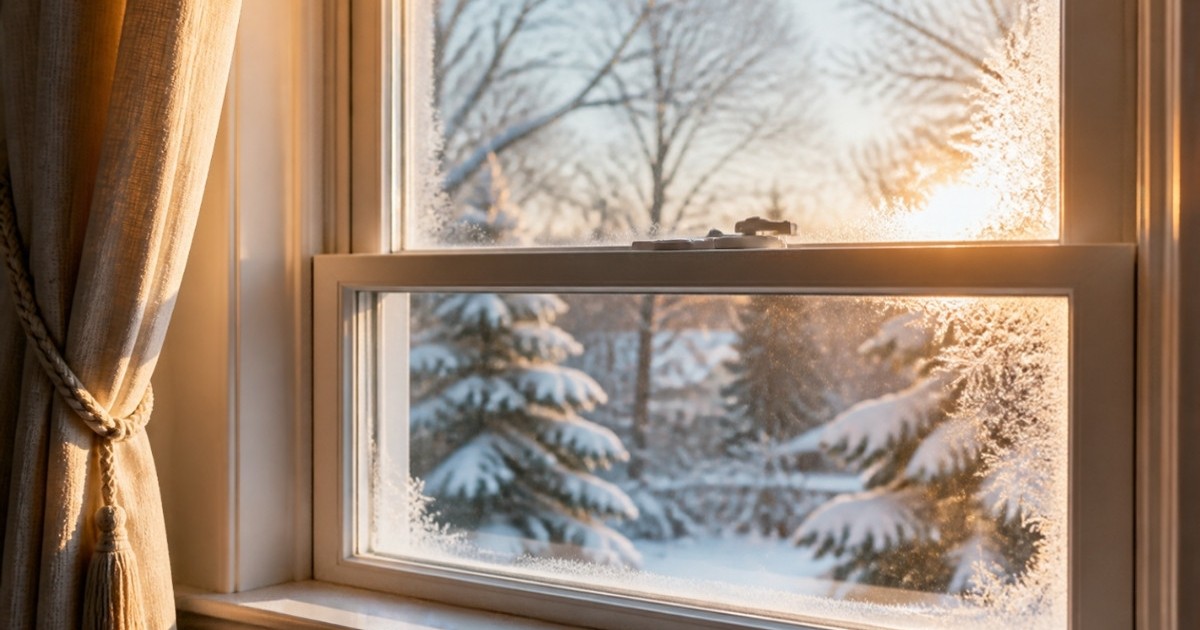
Every winter we get the same call. A homeowner walks into the living room on a cold, sunny morning, opens the blinds, and finds a long crack running across a window nobody touched. No ball, no branch, no bang in the night. If that sounds like your house, you are probably looking at a window stress crack, and it is one of the most common winter glass problems we see in North Jersey.
The good news is that it is usually not a sign that anything is wrong with your house. The less good news is that the glass will not heal itself. Here is how we explain it to customers when we come out to look at one.
What a Window Stress Crack Actually Is
Glass grows a tiny bit when it warms up and shrinks when it cools down. That is normal. The trouble starts when one part of a pane is a lot warmer than another part. The center of the glass sits in the sun or in the warm air of your room, while the outer edge is tucked inside the frame, shaded and cold. The middle tries to expand, the edge does not, and the pull between them builds tension right at the edge of the glass.
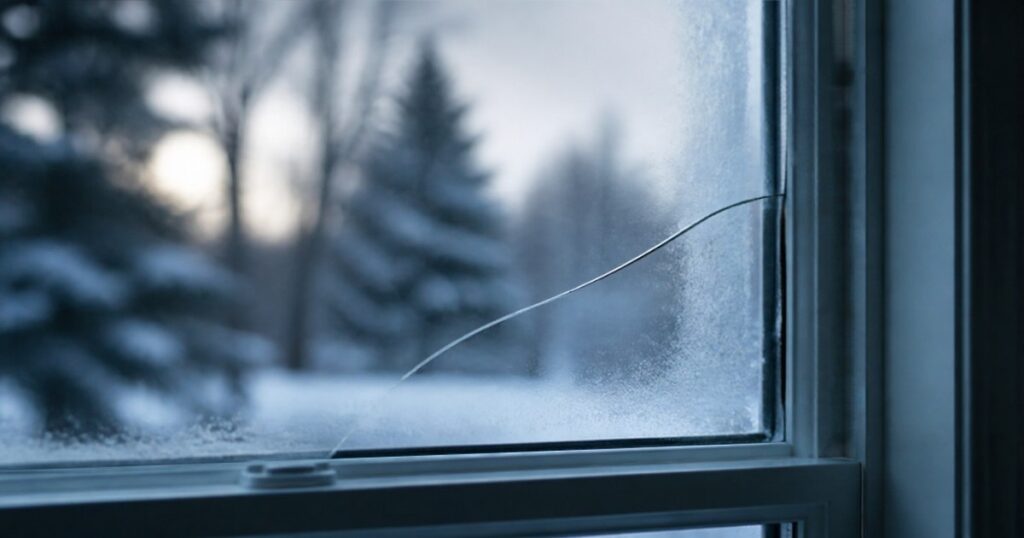
When that tension gets bigger than the edge can handle, the glass lets go. The industry calls it a thermal stress crack, or a thermal break. It is the glass relieving pressure the only way it can.
Standard window glass, called annealed glass, is the most likely to crack this way. Tempered glass is far stronger and handles temperature swings much better, which is one reason it gets used in doors and other spots where safety matters.
Why These Cracks Show Up in New Jersey Winters
Cold alone does not usually crack a window. The real trigger is a big temperature difference across the same piece of glass, and a New Jersey winter is very good at creating that. Think of a January morning in Morristown or Parsippany: it is 15 degrees outside, the sun is coming in low and strong through a south facing window, the heat is running inside, and the glass edge is still cold from the night.

A few things make it more likely, and we see them in homes all the time:
- Partial shade from an overhang, a porch roof, or a tree, so half the pane bakes in the sun and the other half stays cold
- A heating vent or space heater blowing warm air straight onto the glass
- Dark blinds or heavy curtains pulled tight against the window, which trap heat on the glass
- Tinted glass or an aftermarket film that absorbs more heat than clear glass
- A small chip or nick on the glass edge from an old install or a rough cleaning
Big picture windows and south or southwest facing windows tend to take the most abuse because they get the most sun. Spring and fall can do it too, when warm afternoons follow cold nights, but in our experience the cold, bright days of December through February bring in the most calls.
How to Tell a Stress Crack From Impact or Pressure Damage
When we look at a cracked window, the first thing we check is where the crack starts and what shape it takes. That tells us most of the story.
Thermal stress crack
A thermal crack starts at the edge of the glass and comes out at a right angle, straight in from the frame for a short distance, often around half an inch. After that it can wander, curve, or split into a few branches. You may have to look close to the frame to see where it began, because trim and glazing stops can hide the very edge.
Impact crack
Something hit the glass. These usually have a clear starting point somewhere on the face of the pane, with cracks spreading out from it like a star or a spider web. Think snowblower rocks, a hockey puck from the driveway, or a bird.
Pressure crack
These show up in insulated double pane units and tend to look curved, sometimes with an hourglass shape, with no point of impact. They are linked to big pressure changes inside the sealed unit, from weather or from a unit built at a very different elevation from where it was installed. They are less common than stress cracks here.
Telling these apart matters. If it is an impact crack, there is something outside to look into. If it is a stress crack, the fix is mostly about the glass and what is heating it.
Is a Cracked Window Pane an Emergency?
Usually not, but do not ignore it. A single stress crack in one pane of a double pane window often stays put for a while. The window still keeps the weather out, and in most cases the other pane is fine. That said, every cold night and sunny afternoon keeps working the glass, so cracks tend to grow over time.
Here is what we tell homeowners to do in the meantime. Keep blinds and curtains a few inches away from the glass. Turn any heating vent or space heater so it is not blowing on the window. Avoid pressing on the cracked area or slamming the sash. Clear packing tape on the inside can help hold things together for a short time, but it is a stopgap, not a fix.
If the crack goes through both panes, if the glass is loose, if pieces are falling out, or if the window is near a kid’s bed or a walkway, treat it as urgent. Our emergency home glass repair team can secure the opening and replace the glass so you are not stuck with a cold, unsafe window overnight.
Repair or Replace the Glass?
There are resin kits that claim to repair cracked window glass. They can slow a small crack for a little while, but they do not restore the strength of the pane, and on an insulated unit they do nothing for the sealed air space between the panes. Once the crack reaches the seal, the unit can start to lose its insulating gas and eventually fog up, the same problem we covered in our guide to foggy double pane windows.
The real fix is to replace the glass, and in most homes that does not mean replacing the whole window. If the frame and sash are in good shape, we measure on site, have a new insulated glass unit made to size, and install it in your existing frame. That is our window glass replacement service, and it usually costs a fraction of a full window tear out.
While we are replacing the unit, it is a good time to think about the glass itself. Many homeowners upgrade to Low-E glass for better winter comfort. In spots where a window gets hammered by sun and shade, or where safety is a concern, we can talk about tempered glass for that opening.
What affects the cost
We will not throw out a number without seeing the window, because the price really depends on the details. The main factors are the size of the pane, whether it is single glass or a double or triple pane unit, the type of glass (clear, Low-E, tempered, tinted, or laminated), any grids between the panes, how hard the window is to reach (a second floor picture window is a different job than a kitchen slider), and whether the sash needs to come out to do the work.
It is also worth checking your window paperwork. Some manufacturers address stress cracks in their warranty and some exclude them, so find out before you pay out of pocket. If the crack came from a storm or a hit and you are filing an insurance claim, we can provide the documentation your carrier needs.
Can You Prevent Another Stress Crack?
You cannot control the weather, but you can take away a lot of the triggers. Keep window coverings off the glass and leave a gap for air to move. Do not point heat at windows. Think twice before adding a dark film to an existing window, and if you do, ask whether it is approved for that glass. When glass gets replaced, the edges should be clean and undamaged, which is why careful handling during installation matters more than people realize.
For windows that crack more than once in the same spot, the glass type is often the answer. A tempered or heat strengthened unit holds up much better to uneven heating.
Frequently Asked Questions
Can cold weather crack windows by itself?
Cold on its own rarely does it. What cracks glass is a big temperature difference across the pane, like sun on the middle and a cold, shaded edge. Cold sunny winter days create that difference more than any other time of year.
Why did my window crack for no reason?
If there is no point of impact and the crack starts at the edge at a right angle, it is almost always a thermal stress crack. Shade lines, heat vents, tight blinds and small edge chips are the usual culprits.
Will a stress crack in a window keep spreading?
It can. Temperature swings keep putting stress on the glass, so many cracks grow over weeks or months. Some stay stable for a while, but there is no way to know which ones will.
Do I need to replace the whole window for a cracked pane?
Usually not. If the frame and sash are sound, we replace just the glass or the insulated glass unit, which is faster and less expensive than a full window replacement.
Get Your Cracked Window Looked At
Luso Glass has been fixing windows for New Jersey families since 1993, and our own install team handles every job from measuring to clean up. Whether you are in Newark or out in Morris County, we offer free on-site estimates and can tell you quickly whether you are dealing with a stress crack, an impact crack, or something else.
Give us a call at (973) 820-3489 or send us a few details and we will set up a time to take a look.