If you have a shower door leaking water onto the bathroom floor, you are not alone. It is one of the most common calls we get, and it usually starts the same way: a towel on the floor after every shower, then a soft spot in the grout, then someone notices a stain on the kitchen ceiling below. The good news is that most leaks have a simple cause, and many of them can be fixed without replacing the glass.
We have been installing and servicing shower glass in New Jersey since 1993, so we have seen just about every way water can find its way out of an enclosure. Here is how we think about it when we walk into a bathroom with a leak, whether that is a 1960s split level in Paramus or a brand new primary bath in Ridgewood.
First, Figure Out Where the Water Is Really Coming From
Before anyone touches a seal or a tube of silicone, find the exit point. Dry the floor and the outside of the glass completely. Then run the shower the way you normally do, with the head aimed where it usually points, for about five minutes. Stand outside and watch the bottom of the door, the hinge side, the latch side and the corners where glass meets tile.
Water that shows up right under the door usually points to the sweep or the threshold. Water along the wall points to a vertical seal or a gap at the hinge panel. And if the floor is wet but the glass looks dry, the problem may not be the door at all. A cracked grout line, a failed tile joint or a valve trim leak can all look like a door problem from the outside.
Why Is My Shower Door Leaking? The Usual Suspects
Worn or Missing Door Sweep
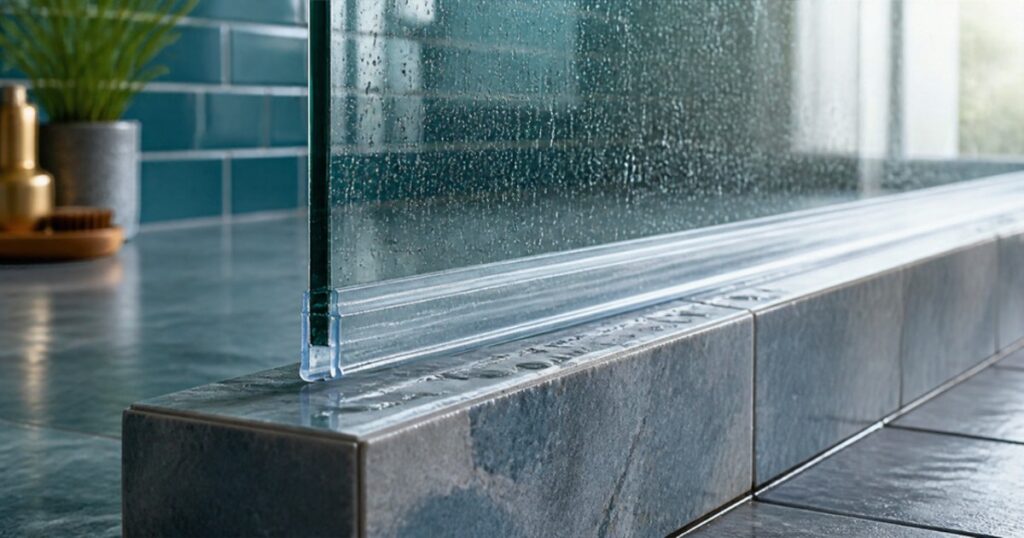
The sweep is the vinyl strip along the bottom edge of the door. It takes a beating every single day. Over a few years it hardens, cracks, yellows or simply slides off the glass. Once that happens, water running down the inside of the door drips straight onto the curb and rolls outward. A frameless shower door leaking at the bottom is very often just a tired sweep. Replacing it is one of the cheapest repairs in the bathroom, but the sweep has to match the glass thickness, usually 3/8 or 1/2 inch on frameless doors, and it has to be cut to the right length so it does not drag.
Missing or Wrong Drip Rail
Some sweeps include a small lip, often called a drip rail, that sits on the outside of the door and kicks water back toward the shower. If your door never had one, or someone replaced it with a plain sweep, the water that clings to the outside face of the glass has nowhere to go but the floor.
Vertical Seals That Have Shrunk or Fallen Off
Frameless doors use clear polycarbonate seals along the hinge and latch edges. They close the small gaps the door needs to swing freely. When those seals get brittle or pop off, spray finds those gaps fast. This is common in homes with hard water, which describes a lot of North Jersey, because mineral buildup stiffens the plastic and makes it crack sooner. If you want those seals to last, our guide on how to clean shower glass covers gentle products that will not eat away at them.
A Door That Has Sagged or Shifted
Hinges loosen over time, especially on heavy frameless doors that get swung hard. When a door drops even a little, the gap at the latch side opens at the top and closes at the bottom, and the sweep stops sitting flat on the curb. Tightening hinge screws sometimes solves it, but if the hinge is stripped or the glass has slipped in the clamp, it needs a proper adjustment.
Old or Failed Silicone
Fixed panels are sealed to the tile and curb with silicone. When that bead peels, mildews or breaks away, water gets behind it and can travel along the curb. The fix is not to smear new caulk over the old. The old silicone has to be cut out completely, the surface cleaned and dried, and a fresh bead laid down. Then the shower should stay off until it cures, which for most silicones means about a full day, so check the label.
A Curb or Floor Pitched the Wrong Way
This one surprises people. The top of the shower curb should pitch slightly into the shower, and the floor should slope toward the drain. Plumbing codes typically call for about a quarter inch of fall per foot toward the drain. If a curb is flat or tilts outward, water that lands on it will roll into the bathroom no matter how good the door is. We see this most in older homes where a tub was converted to a walk in shower without rebuilding the base.
The Shower Head Is Aimed at the Gap
Sometimes the setup is the problem. A rain head or handheld spraying straight at the door hinge, or a body spray that hits the seam between panels, will push water through gaps that would otherwise be fine. Before you replace anything, try angling the head away from the door and see if the puddle shrinks.
Framed Sliding Doors Leak for Different Reasons
Older framed sliders over a tub have their own habits. The bottom track has small weep holes on the inside meant to drain water back into the tub. When those clog with soap scum, the track fills and spills over. Clear them with a pipe cleaner or a small brush. One more thing: if someone ran caulk along the inside edge of the track, that seal traps water in the track. The track should be sealed on the outside, where it meets the tub deck, and left open on the inside.
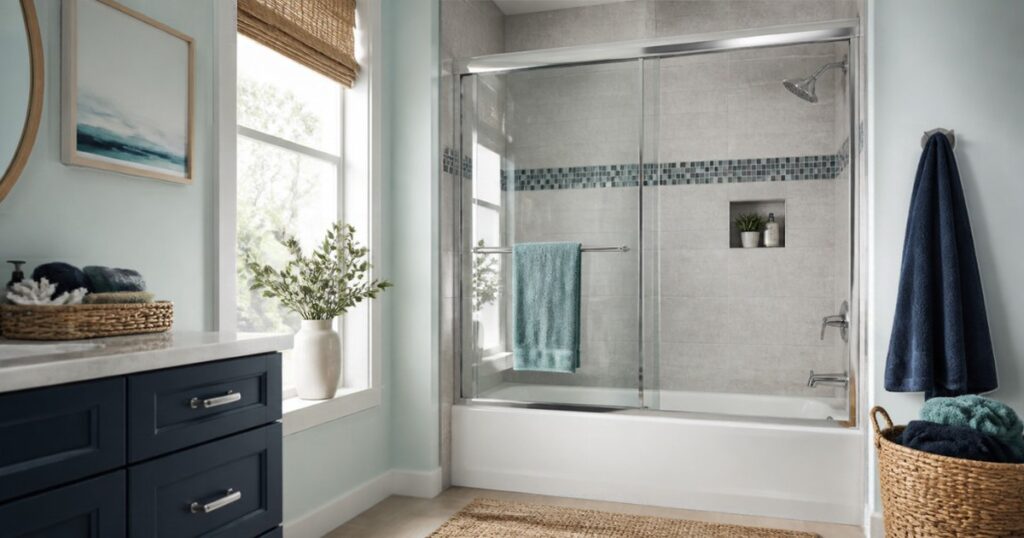
Rollers wear out too. When a slider drops off its rollers, the panels no longer overlap the way they should, and water sneaks through the middle.
What You Can Safely Fix Yourself
A homeowner who is comfortable with basic tools can usually handle these:
- Replacing a slide on bottom sweep or vertical seal that matches your glass thickness
- Cleaning out weep holes and the bottom track on a framed slider
- Cutting out and replacing a short run of failed silicone, then letting it cure
- Re-aiming the shower head and checking that the door fully closes
What we would leave alone is anything involving the glass itself. Shower glass is tempered, which means it cannot be cut, drilled or notched once it is made. If a panel is chipped at the edge, especially near a hinge or clamp, do not try to force it back into position. A chipped edge on tempered glass is a weak point, and the panel should be looked at before anyone puts more stress on it.
When It Makes Sense to Call Us
Call a glass shop when the door has sagged and will not adjust, when the leak keeps coming back after new seals, when there is any damage to the glass, or when the layout itself is the problem. In that last case the real answer might be a different configuration: a taller fixed panel, a door swapped to the other side so it is not in the spray, a header, or a door with a drip rail designed for the opening. Every enclosure we build is custom measured for the exact opening and installed by our own team, which matters a lot in older New Jersey homes where walls are rarely perfectly plumb.
If you are thinking about replacing an old framed unit entirely, take a look at the styles we install on our custom frameless shower doors page. And if you live up in Bergen County, in towns like Hackensack, Teaneck, Fair Lawn or Mahwah, our glass services in Bergen County page shows what we handle there day to day. We also cover the rest of the home on our residential glass services page.
How to Keep a Shower Door Leaking Problem From Coming Back
Squeegee the glass after showers so water does not sit on the sweep and seals. Clean with a mild, non abrasive cleaner. Once or twice a year, run your fingers along the sweep and seals and look for cracks or stiff spots. Check that the door closes on its own and lines up with the fixed panel.
Frequently Asked Questions
Is it normal for a frameless shower door to leak a little?
A frameless door has small gaps by design so it can swing, and the seals and sweep are what keep water in. A few drops on the curb now and then can happen with heavy spray, but water on the floor after every shower is not normal and usually means a seal, sweep or alignment issue.
Can I just add more caulk to stop the leak?
Usually not. Caulk over old caulk does not bond well, and caulk in the wrong spot, like the inside of a sliding door track, can make leaks worse. Find the source first, then remove failed silicone fully before resealing.
How often should shower door seals be replaced?
It depends on use, cleaning products and water hardness. Many households get several years out of them, while homes with very hard water may see them stiffen sooner. Replace them when they are cracked, yellowed, curled or no longer touching the glass or curb.
Do I need a whole new shower door to fix a leak?
Most of the time, no. Sweeps, seals, hinges and silicone are all replaceable. A full replacement makes sense when the glass is damaged, the hardware is no longer made, or the original layout simply cannot keep water in.
Talk to a Luso Glass Installer
If your shower door is leaking and you would rather have someone take a look, we are happy to help. Luso Glass is family owned, licensed and insured, and we offer free on-site estimates across New Jersey. Give us a call at (973) 820-3489 or send us a message through our contact page and tell us what you are seeing. We will tell you honestly whether it is a quick seal swap or something bigger.